DICTIONARY
Updated: April 2026
50+ Terms
Author: Sabong88 Editorial Team
Sabong Terminology Dictionary: 50+ Terms Every Bettor Must Know
Whether you're a first-time viewer or a veteran sabungero, mastering cockfighting terminology is essential for understanding matches, communicating with other bettors, and making informed wagers. This comprehensive dictionary covers every term you'll encounter at the cockpit or on an online sabong platform.
Betting Terms
These are the foundational terms used when placing and discussing sabong wagers. Understanding these is critical for anyone participating in or following cockfighting betting.
Meron
The favored rooster in a match, marked with
red tape. Betting on Meron yields lower payouts because it's expected to win. See our
Meron vs Wala guide.
Wala
The underdog rooster, marked with blue tape. Wala bets carry higher risk but offer significantly larger payouts when the underdog wins.
Llamado
The heavily favored side that attracts the majority of bets. Llamado reflects public sentiment and may differ from the official Meron designation as odds shift.
Dejado
The heavily disfavored side — the rooster "left behind" by public opinion. Dejado bets offer the best payouts but carry the highest risk.
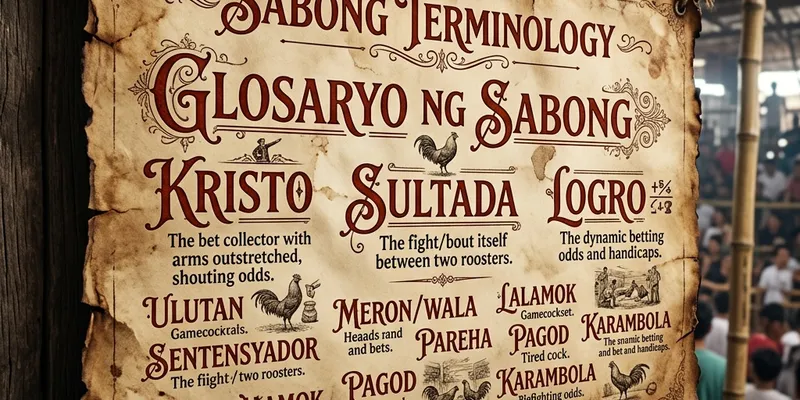
Logro
The odds system in sabong expressed as a ratio (e.g., "10-8 Meron"). Logro determines how much a bettor wins or loses relative to their wager.
Doblada
Odds of 2:1 in favor of Meron. If you bet PHP 100 on Meron at Doblada, you win PHP 50 profit. If you bet PHP 100 on Wala, you win PHP 200 profit.
Doblado
A double-your-bet wager type where the bettor risks double the standard amount for a proportionally larger payout. Doblado bets are common among confident bettors in high-stakes derbies.
Treinta
Odds of 3:1 in favor of Meron — an extreme spread indicating one rooster is heavily favored. Treinta Wala bets pay 3x the stake if the underdog wins.
Wala Lahat
"All wala" — a situation where all bettors bet on the same side (wala/underdog), leaving no one betting on meron. This typically results in a cancelled match or adjusted odds, since the betting system requires action on both sides.
Tabla
A draw. When neither rooster delivers a decisive blow or both are incapacitated simultaneously, the match is declared tabla and bets are returned.
Pusta
A bet or wager in sabong. "Magpusta" means to place a bet. The amount wagered on a match.
Parehas
Even odds — when both roosters are assessed as equally matched and the payout is 1:1 (minus the house commission).
Fight Terms
These terms describe the people, actions, and events that take place during a cockfight — from the release of the roosters to the final call.
Sultada
The simultaneous release of both roosters to begin the fight. The sentenciador signals the sultada after all bets are finalized.
Tari / Gaff
The sharp blade or spur attached to a rooster's left leg. Traditional tari are made of bone or metal. The gaff is inspected before every match for fairness.
Sentenciador
The referee who officiates the cockfight. The sentenciador inspects the roosters, calls the sultada, determines the winner, and resolves disputes.
Kristo
The bookmaker who takes bets from spectators using hand signals. Named for the Christ-like outstretched arms pose. Kristos have extraordinary memory for bets.
Casador
A professional bettor in sabong who wagers large amounts. Casadors often have deep knowledge of bloodlines and rooster assessment.
Mananari
The handler or trainer who prepares and conditions the rooster for fighting. A skilled mananari can significantly improve a rooster's performance through conditioning.
Careo
The initial face-off where roosters are brought close together to provoke aggression before the sultada. Handlers hold the birds and let them peck at each other.
Ruweda / Rueda
The circular motion made by handlers presenting roosters to the crowd before the fight, allowing spectators to assess the birds and place bets.
Tasok
A decisive hit from the gaff that results in a kill or incapacitation. A clean tasok ends the fight immediately.
Bawi
When a seemingly losing rooster rallies and defeats its opponent. A dramatic bawi is one of the most exciting moments in sabong.
Ulatan
The method of pairing roosters for a fight based on weight and gaff type. Proper ulatan ensures a fair and competitive match between evenly matched birds.
Balisong
A type of knife or gaff used in cockfighting, named after the famous Batangas butterfly knife. Balisong-style gaffs are known for their sharpness and specific blade profile.
Kasador
A skilled cockfight handicapper who analyzes roosters before a match. Kasadors study bloodlines, physical condition, and fighting styles to predict outcomes and advise bettors.
Talpakan
The betting area or ring where wagers are placed during a cockfight. The talpakan is where kristos operate and bettors gather to place and settle their bets.
Parada
The pre-fight presentation and display of roosters to the audience. During the parada, handlers show off their birds so bettors can assess condition and fighting potential.
Limang Beses
The "five-count" rule — if a rooster fails to fight back or engage its opponent after five counts by the sentenciador, it is declared the loser.
Rooster Terms
Game fowl terminology covers the breeds, age classifications, and physical characteristics of fighting roosters. Knowledge of these terms helps assess a rooster's potential.
Stag
A young rooster under one year old. Stags are typically faster but less experienced than mature cocks. They fight in stag-only events.
Bullstag
A rooster between 1-2 years old — past stag stage but not yet a full cock. Bullstags combine youthful speed with growing power.
Cock
A mature fighting rooster, typically 2+ years old. Cocks are experienced fighters with fully developed spurs and fighting instincts.
Talisayin
A native Philippine fighting rooster breed known for its agility and speed. Talisayin are prized for their natural fighting ability and endurance.
Texas
A popular American-bred game fowl known for heavy hitting power and aggressive fighting style. Texas crosses are common in Philippine derbies.
Kelso
One of the most famous bloodlines in cockfighting, developed by Walter Kelso. Known for speed, intelligence, and cutting ability with the gaff.
Sweater
A powerful bloodline known for relentless ground fighting and body-punching ability. Sweaters excel in close-quarters combat.
Hatch
A versatile bloodline known for power and durability. Hatch roosters are aggressive fighters that can absorb hits and keep fighting.
Roundhead
A classic bloodline distinguished by its round head shape. Known for high intelligence, aerial fighting ability, and cutting precision.
Manok Panabong
General term for a fighting rooster — any rooster specifically bred and conditioned for cockfighting.
Manok na May Lahi
A purebred fighting rooster with a documented bloodline. These roosters command higher prices and are prized for predictable fighting traits inherited from their lineage.
Larga
A free-range rooster training method where birds are allowed to roam and exercise in open spaces. Larga conditioning builds natural stamina, muscle tone, and fighting instincts.
Soltero
An untested or "virgin" rooster fighting for the first time. Soltero roosters are unpredictable — they may show hidden talent or fold under pressure.
Tiyaga
The fighting endurance and stamina of a rooster. A bird with strong tiyaga can sustain prolonged combat and outlast opponents in longer matches.
Venue Terms
These terms describe the physical and organizational aspects of cockfighting — from the arena itself to the types of events held.
Cockpit / Sabungan
The arena or venue where cockfights are held. Licensed cockpits are regulated under PD 449. "Sabungan" is the Filipino term.
Rueda
The circular fighting area within the cockpit where roosters battle. Also refers to the pre-fight presentation circle.
Arena
A large cockpit venue capable of hosting major derbies and tournaments. Modern arenas have seating for thousands of spectators.
Derby
A formal cockfighting tournament where multiple breeders enter roosters in elimination-style matches. Derbies can be local, provincial, or national.
Hackfight
An informal, single-match cockfight (as opposed to a multi-fight derby). Hackfights are the most common type of sabong in local cockpits.
Ulutan
A type of cockfight where roosters fight with natural spurs (no gaff/tari attached). Ulutan matches tend to last longer than gaffed fights.
Tupada
An illegal, unlicensed cockfight held outside of regulated cockpits — often in backyards, open fields, or remote locations.
Gallera
The Spanish colonial term for a cockpit. Historical galleras were the first formally regulated cockfighting venues in the Philippines.
Pintakasi
A multi-cock derby with elimination rounds, often organized as a benefit or charity event where proceeds go to community or religious causes. Pintakasi are common during town fiestas and major celebrations.
E-Sabong
Online sabong — live-streamed cockfights where viewers bet remotely via digital platforms. Currently suspended under
EO9.
Frequently Asked Questions
What is a Kristo in sabong?
A Kristo is the bookmaker or bet-taker in a traditional cockfight. The name comes from the Christ-like posture of outstretched arms used when taking bets from spectators. Kristos memorize all bets placed through rapid hand signals and are responsible for collecting losses and paying out winnings after each match.
What does Sultada mean?
Sultada is the moment when both roosters are simultaneously released by their handlers to begin the fight. It marks the official start of the cockfight after all bets have been placed and the sentenciador (referee) gives the signal. Once the sultada is called, no more bets are accepted.
What is the difference between Llamado and Dejado?
Llamado is the heavily favored rooster that attracts the majority of bets, while Dejado is the rooster "left behind" — the one most bettors are avoiding. These terms reflect live market sentiment and can shift during the betting window, unlike the fixed Meron/Wala designations.
How many sabong terms should a beginner know?
Beginners should start with at least 15-20 core terms: Meron, Wala, Llamado, Dejado, Logro, Sultada, Kristo, Sentenciador, Tari, Sabungan, Stag, Cock, Derby, Tabla, and Doblada. These cover the essential betting, fighting, and venue vocabulary needed to follow and understand a match.