
History of Sabong in the Philippines — 500 Years of Cockfighting Tradition
Legal Notice: Online sabong (e-sabong) operations are currently suspended in the Philippines under Executive Order No. 9 (2022). This article is provided for educational and historical purposes only. Read our full legal guide.
Pre-Colonial Origins
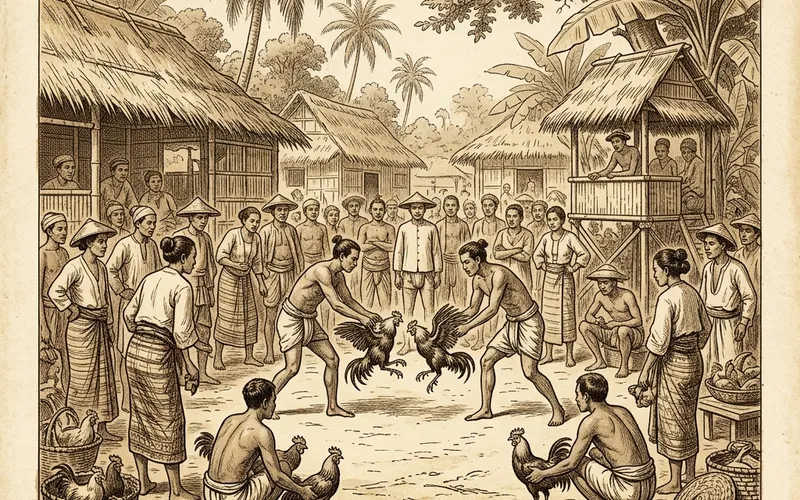
Long before the Spanish galleons appeared on Philippine horizons, cockfighting was already deeply woven into the fabric of island life. Archaeological evidence and oral traditions suggest that sabong arrived in the Philippine archipelago through ancient trade routes connecting Southeast Asia, India, and China — regions where cockfighting had been practiced for thousands of years. The red junglefowl (Gallus gallus), the ancestor of all domestic chickens, is native to Southeast Asia, making the region a natural cradle for the sport.
In pre-colonial Filipino society, cockfighting served purposes far beyond entertainment or gambling. It was a social institution that reinforced community bonds, established social hierarchies, and provided a ritual outlet for the warrior spirit that characterized many Philippine ethnic groups. Barangay chiefs and datus used cockfighting events to display wealth, settle disputes, and solidify alliances with neighboring communities. The roosters themselves were symbols of courage, virility, and honor — values deeply embedded in the Filipino concept of giting (bravery).
The practice was remarkably widespread across the archipelago, from the Ilocos region in the north to the Muslim communities of Mindanao in the south. Each region developed its own variations — different gaff types, different betting customs, different ceremonial traditions — but the core concept remained the same: two roosters, bred and conditioned for combat, meeting in a test of skill and strength that captivated entire communities.
When Ferdinand Magellan's expedition arrived in the Philippines in 1521, his Italian chronicler Antonio Pigafetta documented cockfighting as an already well-established custom among the natives of the Visayas. His accounts describe organized matches with enthusiastic spectators, suggesting a tradition that had been refined over many generations. This documentation provides the earliest written evidence of Philippine cockfighting, though the practice itself is undoubtedly much older.
Spanish Colonial Era (1521-1898)
The Spanish colonization of the Philippines beginning in 1565 brought dramatic changes to nearly every aspect of Filipino life — but sabong proved remarkably resilient. Rather than dying under colonial rule, cockfighting adapted and in many ways flourished, becoming even more formalized and widespread than before.
The Spanish colonizers quickly recognized both the cultural importance of sabong to Filipinos and its potential as a revenue source. Instead of attempting an outright ban (which would have been politically dangerous given the sport's popularity), colonial authorities chose to regulate and tax cockfighting. They established formal cockpits called galleras — purpose-built arenas that replaced the informal village fighting grounds used in pre-colonial times.
The gallera tax became a significant revenue stream for the colonial government. Each licensed gallera paid fees to operate, and a percentage of betting revenue was collected as tax. This created one of the earliest models of regulated gambling in Southeast Asia, with the colonial government effectively becoming a stakeholder in the sabong industry. The economic incentive ensured that the Spanish would protect and perpetuate the sport rather than suppress it.
Spanish rule also introduced several innovations that shaped modern sabong. Metal gaffs (tari) replaced the natural spurs used in pre-colonial matches, making fights more decisive and spectaular. Formal breeding practices were introduced, with Spanish-influenced haciendas establishing the first commercial breeding programs. The concept of the sentenciador (referee) was formalized, creating standardized rules for match conduct and winner determination.
Cockfighting became inextricably linked to the Philippine fiesta calendar. Matches were permitted on Sundays after Mass, during patron saint feast days, and during major holidays. This schedule reinforced the connection between sabong and Catholic religious observance — a uniquely Philippine blend of Spanish colonial religion and pre-colonial tradition. Town fiestas without cockfighting were virtually unthinkable, and the gallera became as important a community gathering place as the church plaza.
During the Philippine Revolution against Spain (1896-1898), sabong cockpits served as secret meeting places for revolutionaries. The Katipunan, the revolutionary society led by Andres Bonifacio, reportedly used galleras as cover for organizing meetings, as large gatherings at cockpits would not arouse Spanish suspicion. This association further cemented sabong's place in Philippine national identity — it was not just entertainment but a symbol of Filipino resilience and cultural independence.
American Period (1898-1946)
The American colonial period brought a fundamentally different attitude toward cockfighting. American administrators, influenced by the growing animal welfare movement in the United States, viewed sabong as a "barbaric" and "uncivilized" practice that had no place in a modern society. Initial efforts focused on suppression, with some American governors attempting to ban cockfighting outright in their jurisdictions.
However, Filipino resistance to these bans was fierce and widespread. Cockfighting had survived 300 years of Spanish colonization and had only grown stronger. Attempts to ban it met with civil disobedience, protests, and a significant political backlash that threatened American administrative authority. The Americans, like the Spanish before them, eventually concluded that regulation was more practical than prohibition.
Act No. 3 of the Philippine Commission in 1900 laid the groundwork for the modern cockpit licensing system. The law established formal permits for cockpit operations, set standards for arena construction and animal handling, and imposed licensing fees that provided revenue for local governments. This regulatory framework, while less permissive than the Spanish system, gave sabong a legal foundation that would endure for over a century.
The American period also saw the beginning of organized derby competitions. While informal tournaments had existed during Spanish times, the Americans' emphasis on organization and record-keeping led to the creation of structured derby circuits with official rules, weight classes, and championship titles. These derbies attracted breeders and handlers from across the archipelago, elevating sabong from a local pastime to a national sport with professional participants.
American influence also brought new breeding knowledge. Filipino breeders began importing American game fowl bloodlines — including early strains of what would become the famous Kelso, Hatch, and Sweater lines — crossbreeding them with local varieties to create stronger, faster fighting roosters. This exchange laid the foundation for the Philippines' emergence as a global center of game fowl breeding in the decades to come.
Post-Independence Growth (1946-1972)
Philippine independence in 1946 ushered in a golden era for sabong. Freed from colonial restrictions, cockfighting expanded rapidly across the new republic. The number of licensed cockpits grew from a few hundred in the late colonial period to over a thousand by the 1960s. Every province, city, and major town had at least one operational gallera, and many had several.
The post-independence period saw the professionalization of every aspect of sabong. Breeding became a serious science, with Filipino breeders establishing world-class farms that produced roosters renowned for their fighting ability. The Philippines began exporting game fowl to other cockfighting nations, building a reputation that continues today. Filipino bloodlines became prized in Latin America, Southeast Asia, and beyond.
The Kristo system reached its peak sophistication during this period. Professional Kristos developed intricate hand signal systems, built reputations for fairness and accuracy, and became essential figures in the sabong ecosystem. The best Kristos could manage betting pools worth hundreds of thousands of pesos using nothing but their memory and hand signals — a remarkable feat of human computation that operated entirely on trust.
Sabong also became deeply integrated into Philippine political life. Politicians campaigned at cockpits, sponsored derbies, and used sabong events as opportunities to connect with voters. Cockpit ownership became a marker of political and economic power, with many prominent families controlling gallera operations in their regions. This political dimension would shape sabong regulation for decades to come.
Regional traditions flourished during this period. The Visayas became known for its high-stakes derbies and aggressive fighting styles. Luzon developed sophisticated breeding programs influenced by American game fowl genetics. Mindanao maintained unique cockfighting customs that reflected the region's diverse cultural heritage, including Muslim, Lumad, and Christian traditions. Each region contributed to the rich tapestry of Philippine sabong culture.
Marcos Era & PD 449 (1974)
The declaration of Martial Law by President Ferdinand Marcos Sr. in 1972 initially raised fears that sabong would be curtailed. Marcos imposed strict controls on public gatherings and entertainment, and some cockpit operations were temporarily suspended. However, Marcos himself was an avid sabong enthusiast, and the sport's massive popular following made a permanent ban politically untenable.
On March 9, 1974, Marcos signed Presidential Decree No. 449, known as the "Cockfighting Law of 1974." This landmark legislation became the definitive legal framework for sabong in the Philippines and remains the foundation of cockfighting regulation to this day, more than five decades later.
PD 449 established clear rules for every aspect of cockfighting operations:
- Permitted Days: Cockfighting was allowed on Sundays, legal holidays, local fiestas (for a maximum of three days), and during provincial, city, or municipal agricultural, commercial, or industrial fairs. International and national derbies could also receive special permits for additional fighting days.
- Licensing Requirements: All cockpits must obtain a license from the local government (city or municipality). Licenses specified the cockpit's location, capacity, and operating schedule. Unlicensed cockpits were declared illegal and subject to closure.
- One-Cockpit Rule: Only one cockpit was allowed per city or municipality to prevent oversaturation. Exceptions could be granted for cities with populations exceeding 100,000.
- Age Restrictions: Minors (under 18) were prohibited from entering cockpits during fights.
- Penalties: Illegal cockfighting (tupada or tigbakay — unlicensed matches) was punishable by imprisonment and fines. Cockpit operators who violated licensing conditions faced license revocation.
PD 449 represented a careful balance between preserving a deeply rooted cultural tradition and imposing modern regulatory standards. By providing a clear legal framework, the decree gave cockpit operators certainty and legitimacy while giving the government tools to combat illegal underground operations. The law's longevity — it has remained substantially unchanged for over 50 years — is testament to the effectiveness of this balance.
The Marcos era also saw the emergence of large-scale commercial cockpits that could seat thousands of spectators. These modern arenas featured improved facilities, better lighting, and seating arrangements that enhanced the spectator experience. The Manila area's major cockpits — including the Pasay cockpit and the Araneta Coliseum sabong events — became premier entertainment venues that attracted high-society bettors alongside ordinary sabungeros.
Modern Era (1986-2019)
The post-Marcos era brought continued growth and professionalization to the sabong industry. The restoration of democracy in 1986 did not alter PD 449, which remained the governing law. However, the liberalization of the Philippine economy and the growth of media brought new dimensions to cockfighting.
The breeding industry reached unprecedented sophistication. Filipino breeders like the legendary Biboy Enriquez, Atty. Jun Lacson, and other renowned mananaris developed world-class breeding programs that combined American, British, and local bloodlines. Philippine-bred game fowl became internationally recognized for their exceptional fighting quality, and Filipino breeders regularly competed in and won international derbies in Mexico, the Dominican Republic, and across Southeast Asia.
International derbies became major events in the Philippine sporting calendar. The World Slasher Cup, held at the Araneta Coliseum in Quezon City, grew into the most prestigious cockfighting event in the world, attracting breeders and bettors from over 20 countries. With prize pools reaching millions of pesos and betting volumes in the tens of millions, these events demonstrated sabong's economic significance and global reach.
The cockpit industry also modernized its facilities and operations. Air-conditioned arenas, professional video systems, and computerized betting tote boards began appearing in premium cockpits. Some operators introduced membership programs, VIP sections, and dining facilities, transforming cockpits from basic fighting arenas into full entertainment complexes.
By the 2010s, the Philippine sabong industry was generating billions of pesos annually in direct economic activity, supporting thousands of jobs in breeding, conditioning, cockpit operations, and related services. The industry's supply chain extended to feed manufacturers, gaff makers, veterinary services, and transportation — making sabong a significant contributor to rural economies nationwide.
The E-Sabong Revolution (2020-2022)
The COVID-19 pandemic in 2020 created an unprecedented crisis for the sabong industry. Government-mandated lockdowns closed all cockpits nationwide, cutting off the sport from its traditional in-person audience. For the first time in centuries, Filipino sabungeros could not attend fights. But the disruption also created an opportunity that would transform the industry — and ultimately lead to its most dramatic crisis.
Enterprising operators pivoted to live-streaming technology, broadcasting cockfights from private arenas to viewers watching on smartphones and computers. PAGCOR (Philippine Amusement and Gaming Corporation) saw an opportunity to generate revenue during the economic downturn and issued special licenses for e-sabong operations. By mid-2021, several licensed platforms were operating, with PAGCOR collecting franchise fees and a percentage of betting revenue.
The growth was explosive. Pitmaster Live, operated by Lucky 8 Star Quest Inc., became the dominant platform with millions of registered users. Other platforms including Sabong International, DS88 (Lucky Cock), and several smaller operators competed for market share. At its peak, the e-sabong industry was generating an estimated PHP 640 million per month in revenue for PAGCOR alone, with total industry betting volume reaching tens of billions of pesos.
E-sabong democratized cockfighting betting in ways that traditional cockpits never could. The minimum bet dropped as low as PHP 20, making it accessible to practically any Filipino with a smartphone and a GCash account. The convenience of betting from home, combined with the addictive nature of rapid-fire matches running 12-16 hours daily, created a massive user base that included many people who had never visited a traditional cockpit.
But the industry's rapid, under-regulated growth created serious problems. In early 2022, reports emerged that over 30 individuals had gone missing — many of them linked to e-sabong operations as employees, agents, or bettors. The most high-profile case involved Charlie "Atong" Ang, a businessman with alleged gambling syndicate connections who was linked to several e-sabong operations. A Senate investigation led by Senator Ronald "Bato" dela Rosa uncovered disturbing patterns of exploitation, addiction, and criminality within the rapidly expanding industry.
The Senate hearings revealed that some e-sabong operations were running matches around the clock, encouraging compulsive gambling. Agents recruited bettors in low-income communities, extending credit that trapped vulnerable individuals in debt cycles. The missing persons cases suggested darker criminal elements had infiltrated the industry, using e-sabong as cover for illegal activities including money laundering.
Executive Order 9 & The Ban (2022)
On May 3, 2022, President Rodrigo Duterte ordered the immediate suspension of all online sabong (e-sabong) operations in the Philippines. On December 28, 2022, President Ferdinand Marcos Jr. signed Executive Order No. 9, which directed the continued suspension of e-sabong operations nationwide.
The stated reasons for the suspension were multifaceted. The missing persons cases were part of the controversy — the government could not ignore the apparent connection between e-sabong operations and the disappearance of over 30 individuals. The social harm caused by widespread gambling addiction was another major factor, with reports of families losing their savings, breadwinners depleting their income, and children being neglected by parents glued to e-sabong streams.
The suspension also affected people beyond the operators themselves, including cockpit workers, breeders, handlers and support staff whose livelihoods were tied to the e-sabong ecosystem, and it ended PAGCOR's e-sabong licence revenue.
EO9 explicitly distinguished between online sabong and traditional cockfighting. Traditional sabong in licensed cockpits remained legal under PD 449, and the executive order did not affect in-person cockfighting operations. The exemption covers traditional cockfights authorized or licensed under existing laws.
Sabong Today (2023-2026)
In the years since EO9, the sabong landscape has evolved significantly. Traditional cockfighting has experienced a resurgence as bettors who were drawn to e-sabong have returned to physical cockpits. Licensed sabungans across the country report increased attendance and betting volumes, particularly during major derbies and fiesta events. The World Slasher Cup and other international derbies continue to attract global participants.
The push to resume e-sabong operations continues from various stakeholders. Industry groups have lobbied lawmakers for new legislation that would re-legalize online sabong with stronger regulatory frameworks, including stricter KYC requirements, betting limits, mandatory self-exclusion programs, and enhanced security measures. Several bills have been filed in Congress, though none have gained sufficient traction for passage as of April 2026.
Meanwhile, some e-sabong operations have reportedly moved offshore, operating from jurisdictions outside Philippine regulatory reach and targeting Filipino bettors through VPN access and social media promotion. The government has attempted to combat these illegal offshore operations, but enforcement remains challenging in the digital environment.
Sabong's Cultural Significance
Beyond the gambling, the odds, and the controversies, sabong holds a unique place in Philippine cultural identity that no other sport or pastime can match. For more than five centuries, cockfighting has been the thread connecting generations of Filipinos across class lines, geographic boundaries, and historical upheavals.
At its core, sabong is a community bonding experience. In rural Philippines, the cockpit is a social center — a place where farmers, fishermen, merchants, and professionals gather on Sunday afternoons. The sabungan is where news is shared, business deals are struck, political alliances are formed, and friendships are forged. For many Filipino men, the cockpit serves a social function comparable to the barbershop or the community pub in other cultures.
Sabong is also tied to the Philippines' livestock heritage. The breeding, conditioning, and care of fighting roosters requires specialized knowledge passed down through families over generations. Many breeding farms are multi-generational operations where children learn the art of conditioning, feeding, and training roosters from their fathers and grandfathers. This living tradition preserves agricultural knowledge and practices that might otherwise be lost in an increasingly urbanized society.
The sport embodies values that are central to Filipino identity — courage in the face of adversity, respect for tradition, loyalty to one's community, and the belief that even the underdog can triumph against odds. The Filipino concept of lakas ng loob (inner strength) is on full display in the cockpit, both in the roosters that fight and in the bettors who risk their money on instinct and judgment.
Critically, sabong's cultural significance cannot be separated from its economic impact. The sabong industry supports an entire ecosystem of livelihoods — from rural breeders who raise roosters on small farms to urban cockpit operators who employ hundreds. Feed suppliers, gaff manufacturers, veterinarians specializing in game fowl, and traditional healers who use herbal remedies for rooster conditioning all depend on the sabong economy. In provinces like Batangas, Bulacan, and Pampanga, sabong-related activities represent a measurable percentage of local economic output.
As the Philippines navigates the complex question of whether and how to bring online sabong back, understanding this cultural depth is essential. Sabong is not simply a form of gambling that can be analyzed purely through the lens of regulation and revenue. It is a living cultural institution that has survived conquest, colonization, and modernization — and will likely continue to evolve in whatever form the future brings.
Frequently Asked Questions
Sabong predates Spanish colonization and is believed to be over 500 years old. When Ferdinand Magellan's expedition arrived in the Philippines in 1521, Antonio Pigafetta documented cockfighting as an already well-established tradition among native Filipinos in the Visayas.
Presidential Decree 449, signed by President Ferdinand Marcos Sr. in 1974, is known as the "Cockfighting Law of 1974." It is the primary legal framework governing sabong in the Philippines, establishing rules for licensing cockpits, permitted days for cockfighting, and penalties for illegal operations. Learn more in our complete legal guide.
Online sabong (e-sabong) was suspended in May 2022 after reports surfaced of over 30 individuals going missing in connection with e-sabong operations; Executive Order No. 9 (December 2022) continued the suspension. A Senate investigation also cited concerns about gambling addiction, social harm, and the rapid unregulated growth of the industry.
Yes, traditional cockfighting in licensed cockpits remains legal in the Philippines under PD 449. Cockfights are permitted on Sundays, legal holidays, local fiestas, and during sanctioned derbies. Only online sabong (e-sabong) operations have been suspended under EO9.
E-sabong (online sabong) began gaining traction in the late 2010s when operators started live-streaming cockfights. It exploded in popularity during the COVID-19 pandemic in 2020-2021 when traditional cockpits were closed due to lockdowns, with PAGCOR issuing special licenses to online operators. Read our complete online sabong guide for more details.
Explore More: Discover related sabong topics on Sabong88: Sabong Legal Guide | Sabong Terminology Dictionary | Online Sabong Guide | Back to Home