Meron vs Wala: Complete Sabong Terminology
Every sabong match comes down to two sides — MERON and WALA. Understanding these two sides is central to sabong terminology. This guide breaks down everything you need to know about the meron-wala system, and how odds are described by veteran sabungeros. Note that traditional sabong at licensed cockpits is regulated by local government units.
What is Meron?
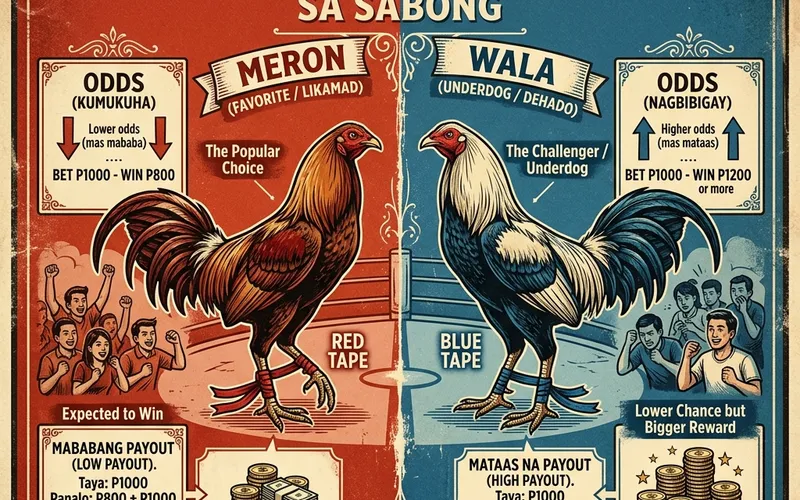
MERON is the favored side in a sabong match. The term "meron" literally means "there is" or "has" in Filipino, implying that this rooster "has" the advantage. In the cockpit, the Meron rooster is identified by a red tape marker wrapped around its leg.
When a rooster is designated as Meron, it means the Kristo (bookmaker) and arena assessors have evaluated it as the stronger fighter based on several factors:
- Breed and bloodline: Premium bloodlines like Kelso, Sweater, or Hatch from reputable breeders carry weight in the assessment.
- Physical condition: Body weight, muscle tone, feather quality, leg strength, and overall alertness during the pre-fight presentation.
- Fight history: A rooster with multiple wins will almost always be designated Meron.
- Handler reputation: Experienced mananaris (handlers) from established farms contribute to a higher assessment.
Because Meron is the favorite, betting on it yields lower payouts. The logic is straightforward: since Meron is expected to win, more people bet on it, and the returns per peso wagered are reduced. Typical Meron payouts range from 0.70x to 0.95x your bet in profit, depending on how heavily favored the rooster is.
For conservative bettors, Meron provides a safer path with consistent small wins. However, relying exclusively on Meron bets can erode your bankroll through accumulated losses on the occasions the favorite falls — which happens more often than most beginners expect.
What is Wala?
WALA is the underdog side in a sabong match. The word "wala" means "none" or "nothing" in Filipino, suggesting this rooster lacks the perceived advantage. The Wala rooster is marked with a blue tape on its leg.
A rooster gets designated as Wala for reasons opposite to Meron:
- Lesser-known bloodline or a breed perceived as weaker in the current matchup.
- Smaller size or weight disadvantage compared to the Meron rooster.
- Less impressive fight record or a newer rooster with limited history.
- Handler from a smaller or less established farm.
The advantage of betting on Wala is the higher payout. Because fewer people bet on the underdog, the returns when Wala wins are significantly more generous — typically ranging from 1.1x to 2.0x or more in profit, depending on how heavily the odds favor Meron.
Experienced sabungeros know that Wala wins happen frequently — cockfighting is inherently unpredictable, and underdogs pull off upsets in roughly 35-45% of matches. This is why value-oriented bettors often favor Wala in the right situations, particularly when odds are overly inflated toward Meron due to public sentiment rather than objective rooster quality.
How Odds Work in Sabong
Sabong uses a unique odds system called logro that differs from Western betting formats. Understanding logro is essential for calculating your potential winnings and identifying value bets.
Odds are expressed as a ratio, such as "10-8 Meron" or "Wala Treinta". Here's how the most common formats work:
| Odds Expression | Meron Bet (PHP 100) | Wala Bet (PHP 100) | Interpretation |
|---|---|---|---|
| 10-8 Meron | Win PHP 80 profit | Win PHP 125 profit | Meron slightly favored |
| 10-9 Meron | Win PHP 90 profit | Win PHP 111 profit | Nearly even match |
| Doblada | Win PHP 50 profit | Win PHP 200 profit | Meron heavily favored (2:1) |
| Treinta | Win PHP 33 profit | Win PHP 300 profit | Meron very heavily favored (3:1) |
| Wala Lahat | All bets go to Wala — extremely rare, one-sided match | ||
The Kristo sets the initial odds based on rooster assessment, but odds can shift as public betting patterns emerge. If too much money flows to one side, the Kristo adjusts the logro to balance the book — similar to how odds move in sports betting. This dynamic pricing creates opportunities for sharp bettors who can spot value before odds shift.
Meron vs Wala — Which Should You Bet On?
The eternal question in sabong: should you back the favorite or the underdog? Here's a side-by-side comparison to help you decide:
| Factor | MERON | WALA |
|---|---|---|
| Win Rate | Higher (~55-65%) | Lower (~35-45%) |
| Payout | Lower (0.70x-0.95x profit) | Higher (1.1x-3.0x+ profit) |
| Risk Level | Lower | Higher |
| Best For | Conservative, steady players | Value seekers, risk-tolerant bettors |
| Bankroll Impact | Slow, steady growth (or loss) | Volatile: big swings up or down |
| Tape Color | Red | Blue |
| Common Mistake | Blindly backing favorite every time | Chasing losses with longshot underdogs |
The truth is that neither side is inherently better. Profitability in sabong comes from finding value — betting on a side when the implied probability from the odds is lower than the actual probability of that rooster winning. Sometimes that's Meron at fair odds; sometimes it's Wala at inflated odds.
Understanding Llamado and Dejado
Beyond Meron and Wala, two additional terms are critical for understanding sabong odds: Llamado and Dejado.
Llamado (from Spanish "llamar," to call) refers to the more heavily favored rooster — the one that draws the most bets. While Llamado is closely related to Meron, they're not always identical. A rooster can start as Meron but the Llamado can shift if betting patterns change mid-session. Llamado represents the public consensus on which rooster will win.
Dejado (from Spanish "dejar," to leave behind) is the less favored rooster — the one "left behind" by public opinion. Dejado carries better odds because fewer bettors are willing to risk their money on it. Smart sabungeros watch for situations where the Dejado status is overdone — where a perfectly competitive rooster is being overlooked because of superficial factors like handler reputation or cockpit politics.
The interplay between Meron/Wala (fixed designations) and Llamado/Dejado (fluid market sentiment) creates the dynamic that experienced bettors exploit. When the Llamado-Dejado gap is massive — say, Treinta odds — but the roosters appear evenly matched on inspection, that's a prime opportunity for a value bet on the Dejado.
Betting Strategy for Meron and Wala
Developing a sound betting strategy requires combining rooster evaluation, odds analysis, and disciplined bankroll management. Here are the core principles used by profitable sabungeros:
1. The Value Betting Approach
Instead of asking "which rooster will win?", ask "are the odds fair?" If you assess a Wala rooster has a 40% chance of winning, but the odds imply only a 30% chance, that's a value bet on Wala. Over hundreds of bets, consistently finding these discrepancies produces profit — regardless of which individual bets win or lose.
2. The Contrarian Strategy
When public money pours overwhelmingly onto Meron (creating Treinta or Doblada odds), the Wala payout becomes extremely attractive. In high-profile derbies where emotional betting drives the odds, going against the crowd can be highly profitable. The key is patience — wait for odds that genuinely compensate you for the risk.
3. Bankroll Management Rules
- Unit System: Define a "unit" as 1-3% of your total bankroll. Never exceed 5% on a single match.
- Flat Betting: Bet the same unit size on every match regardless of confidence level. This protects you from emotional over-betting.
- Stop-Loss: Set a daily loss limit (e.g., 10 units). Once reached, stop betting for the day. No exceptions.
- Win Target: Set a daily win target (e.g., 5 units). When reached, consider locking in profits and stopping.
4. Pre-Fight Analysis Checklist
Before every bet, evaluate:
- Physical condition of both roosters during presentation
- Weight matchup — is one rooster significantly heavier?
- Breed compatibility — some bloodlines have style advantages against others
- Handler reputation and historical win rate at this cockpit
- Current odds vs your assessed probability
- Whether betting is emotionally driven (derby fever) or rational
5. Record Keeping
Track every bet in a spreadsheet or notebook: date, match, side chosen, odds, stake, result, profit/loss, and any observations. Review your records weekly to identify patterns — are you more profitable on Meron or Wala? At certain cockpits? On certain days? Data transforms you from a gambler into an analyst. Use our sabong odds calculator to calculate potential payouts before placing your bets.
Frequently Asked Questions
Meron is the favored side in a sabong match, identified by a red tape marker on the rooster's leg. Betting on Meron offers lower payouts but higher probability of winning because this rooster is considered the stronger fighter.
Wala is the underdog side in a sabong match, identified by a blue tape marker. Betting on Wala carries higher risk but offers significantly better payouts when the underdog wins. Experienced bettors often find value in Wala bets.
Sabong odds (logro) are set by the Kristo based on rooster assessment — breed, weight, condition, fight history, and handler reputation. Odds are expressed as ratios like "10-8 Meron" and can shift as betting patterns develop.
Neither is inherently better. Meron wins more often but pays less, while Wala wins less frequently but pays more. Long-term profitability depends on finding value — betting on a side when the odds are better than the actual probability of winning.
A draw (tabla) occurs when both roosters are unable to continue or when neither delivers a decisive blow within the time limit. In a tabla, all bets are typically returned to the bettors. Some platforms may deduct a small handling fee.